


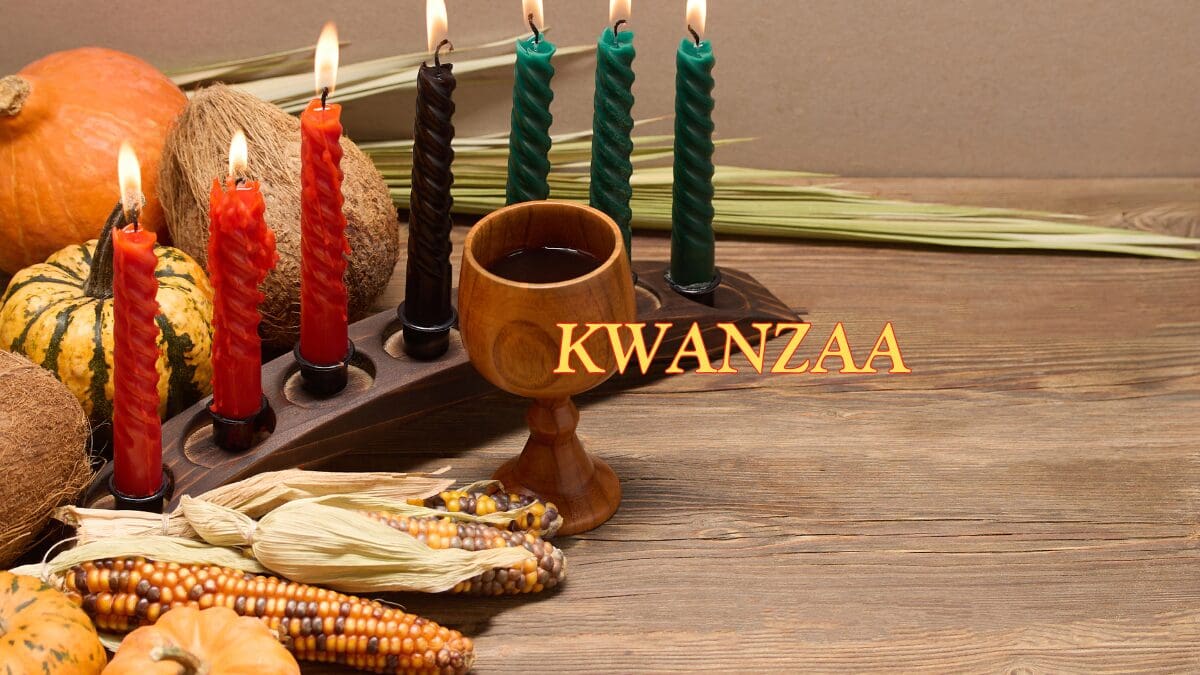
The article title is a rhythmic beginning of a song that seeps in each year as we near its significance. Kwanzaa arrives as a conversation, “Habara gani!” a greeting between a mighty past and promising future.

Kwanzaa is a seven-day celebration of Black culture and values. It honors family, community, and legacy. Each day highlights a principle like unity or purpose. Lighted by candles of the kinara and artifacts of culture rooted in African traditions, Kwanzaa offers space to reflect, gather, and affirm identity. It is a return to what grounds and sustains its celebration.
Kwanzaa sits between Christmas and New Year as a deliberate pause—a sacred hinge where celebration meets reflection. Positioned there, Kwanzaa offers respite from consumer frenzy and a chance to re-root intentions for the year ahead. In 2025 its significance grows as communities use that liminal week for community outreach and repair, intergenerational storytelling and teaching. This timing makes Kwanzaa a holiday and a strategic practice for cultural resilience.
Principles dedicated to honor ancestors is to practice Umoja by sharing meals and histories; Kujichagulia by claiming self-determination; Ujima by tending neighbors’ needs; Ujamaa by building cooperative economies; Nia by aligning daily work with collective purpose; Kuumba by making beauty from scarcity; and Imani by keeping faith in one another. These principles become rituals: lighting the kinara, speaking elders’ names, recording recipes, mentoring youth, and creating art that remembers. The holiday is not a single week but a yearlong ethic of care.
Each story a seed, each seed a promise envisioned by its founder Dr. Maulana Karenga in 1966. Carry its light into classrooms and boardrooms, and city halls and rural roadways, and soup and home kitchens, and quiet morning. Each day honors lineage and possibilities for Kwanzaa’s principles to root and rise through ordinary steadfast days.
Kwanzaa
Kwanzaa
Kwanzaa