


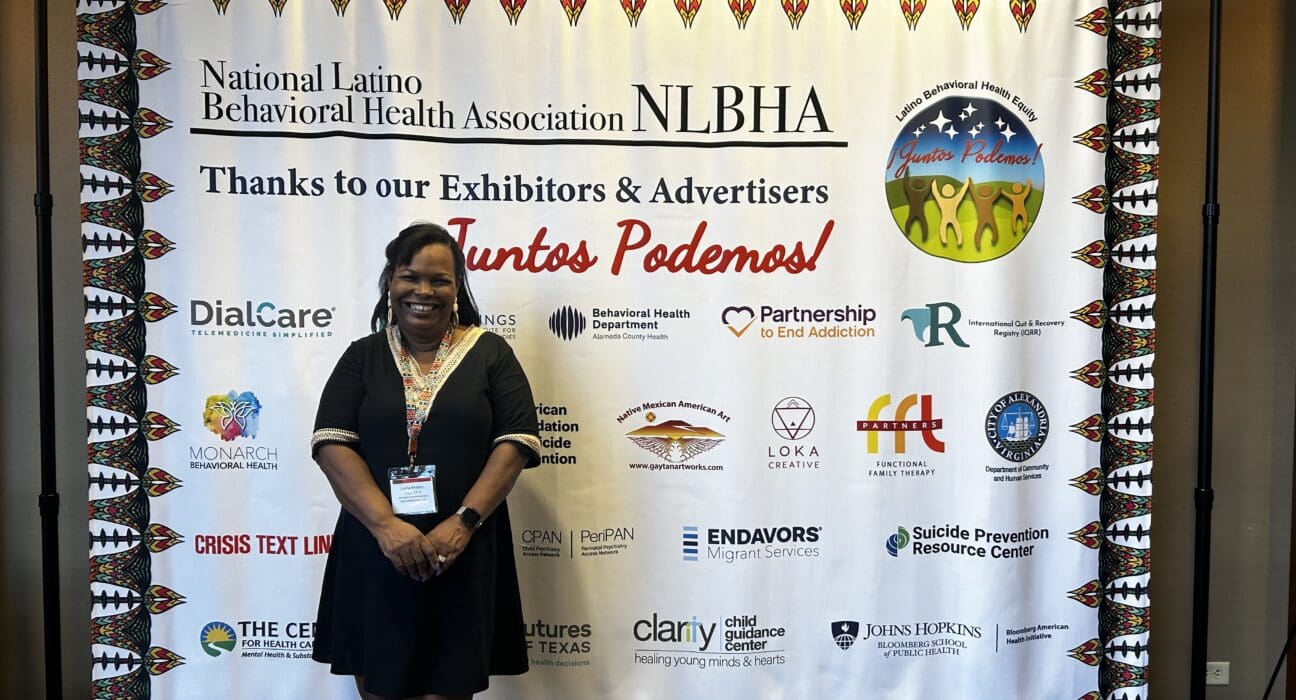
Lucilla Beaton thought South Carolina would be her retirement destination. But after a few visits to the area, she and her daughters quickly realized our family friendly state, with its natural beauty and laid-back style, couldn’t wait any longer. They moved to the upstate of SC much sooner than they originally planned to and Beaton quickly established herself as an educator and an advocate for our rapidly growing Hispanic population, providing counseling services to Hispanic and Latino children and adolescents and their families.
Beaton was born in the Dominican Republic and moved to Brooklyn, NY with her family at three years old. She grew up in the NY public housing system and was educated in the New York City public school system. Says Beaton of this experience,
“It was interesting. I tell people that I grew up in the projects, but I wasn’t from the projects, because we had a very sheltered existence.”
Beaton received her Master of Social Work from Yeshiva University in Washington Heights, NY. After moving to SC, she completed studies in trauma focused cognitive behavior therapy, an intervention strategy for children who have experienced trauma. With these credentials and a passion for helping children, Beaton began working in schools and became independently licensed and started contracting with counseling, mental health, and behavioral focused agencies as a therapist, supervisor, or consultant.
“I’ve always worked in the school systems,” says Beaton, “but I’ve also simultaneously worked as a therapist in clients’ homes but always with children and adolescents and their families. A big piece of my approach is educating families on how they can support a child who has a learning disability or has a mental health condition and how they can work with their child’s school to get their child the help they need.”
Since coming to SC, Beaton has worked in the School District of Greenville County, Anderson School District 5 and she is currently the Bilingual Social Worker for the School District of Oconee County. She primarily serves students attending Walhalla schools, but she can serve any student in Oconee County in need.
In addition to her work in the Oconee County school system, Beaton does work in the Hispanic and Latino community that is focused on suicide prevention, awareness, and education. She is certified to teach the Mental Health First Aid class, an endeavor that interests her because the class has a suicide prevention component. She teaches this class for the United Way of Anderson, primarily in Spanish, because the United Way recognized a need for this class in the Hispanic and Latino communities. Beaton has also served as a trainer for the Department of Mental Health for the Applied Suicide Intervention Skills training and the Safe Talk training, a three and a half hour training on developing awareness of suicide and how we can intervene when someone speaks of committing suicide.
“There is a stigma in the Spanish speaking population surrounding mental health and suicide. As a therapist, I know the value of working with these children and adolescents who are having suicidal thoughts and making suicidal gestures due to trauma they’ve experienced. I felt it was important to educate the community about recognizing signs and symptoms and how to listen non-judgmentally to a young person having these thoughts and knowing how to ask, “Are you thinking about committing suicide and what do we need to do to keep you safe?”
Beaton believes prevention works best when parents are involved in the counseling services so that they know what to do when their child displays suicidal behaviors or expresses suicidal thoughts. Says Beaton,
“When working with children only, we can develop a safe plan for them to follow, but when they get home and say or do something suicidal, parents will call me and say, “What do I do?” So it is important that parents receive the education and know and understand the safe plan as well.”
In her efforts to make her reach about this topic as far and deep as possible in the Hispanic and Latino community, Beaton began reaching out to communities of faith, because she knows that while many people may not go to a counselor about these concerns, they may speak to a pastor.
“I have a goal of getting as many people as possible comfortable with having these conversations and knowing what to do about it,” says Beaton.
An emerging focus for Beaton is finding ways to mitigate the lack of culturally competent therapists in the area. She has been working with colleagues to identify ways to develop a workforce of therapists who are aware of cultural differences and expectations and know how to adapt services to different cultures.
“This is what gives me joy and fills my cup. I get to work with many different organizations to serve this community and it is an honor and privilege to be able to do that.”
For anyone interested in or in need of suicide awareness education, Beaton will be hosting a session titled Suicide Awareness training on September 26 at 4:30pm at the Walhalla Library.